
Look at fifty old money outfits and you will notice the same fifteen garments over and over. A navy blazer. A camel coat. A white shirt. Straight jeans. Loafers. The looks change, the pieces do not, which means the useful version of this page is not another set of photos. It is the shopping list underneath them, in the order to buy it. Old money aesthetic outfits are a wardrobe problem before they are a styling one.
So that is what this is. Fifteen pieces in three tiers, what each one does, where to spend and where not to, and a table at the end showing which combinations cover which occasions. If you own the list, the outfits assemble themselves.
This post contains affiliate links. If you buy through these links, I may earn a small commission at no extra cost to you. Images in this post are AI-generated for illustration purposes.
The Three Rules the Whole List Obeys
Fashion psychologist Shakaila Forbes-Bell described the look to Who What Wear as dressing “to give the appearance that you’ve inherited large sums of money rather than worked for it.” Seezona founder Anna-Carina Helander gave InStyle the shopping-list version: “elegant, timeless pieces, made of high-quality fabrics. Think tailoring, clean lines, cable knits, turtlenecks.”
Three rules come out of that, and every piece below satisfies all three. Fit: nothing tight, nothing swamping, hems that land on purpose. Fabric: cotton, wool, linen, silk, cashmere, leather, no visible logos. Color: cream, navy, camel, charcoal, black and white, with one seasonal accent at most. That colour rule is what makes a capsule this small work, because every piece goes with every other piece by default. Minimal old money outfits are not a style choice here, they are a mathematical consequence.
It is also not going anywhere. Who What Wear’s Kristen Nichols and Eliza Huber named “A Simple Plan” and “Well Suited” among ten trends from the fall and winter shows, one for stripped-back silhouettes and one for coordinating suits. Both describe things already on this list.
| Tier | Pieces | Buy when |
|---|---|---|
| 1. The five you buy first | Navy blazer, camel coat, white shirt, straight jeans, loafers | Now, one at a time |
| 2. The five that do the most work | Cashmere crewneck, cream trousers, knit dress, midi skirt, wide-leg trousers | Once tier 1 is complete |
| 3. The five for occasions | Satin blouse, slip dress, linen dress, knit set, tweed jacket | As the diary demands |
Tier 1: The Five You Buy First
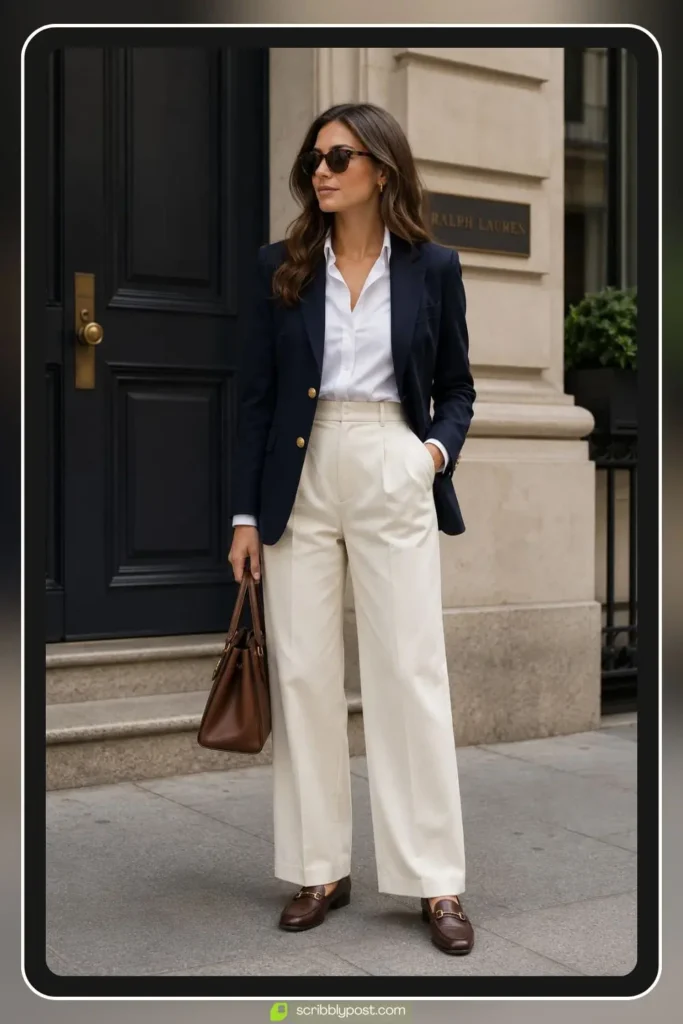
The navy blazer. Single-breasted, shoulder seam sitting on your actual shoulder, sleeves ending at the wrist bone. This one piece appears in more combinations than anything else on the list: over the white shirt for old money work outfits, over the knit dress for dinner, over the slip dress for a party, over a tee with jeans at the weekend. Buy it first and have the sleeves altered, because sleeve length is what separates a blazer that fits from one that does not. A [AMAZON: women’s navy single breasted blazer] is the anchor of the whole wardrobe.
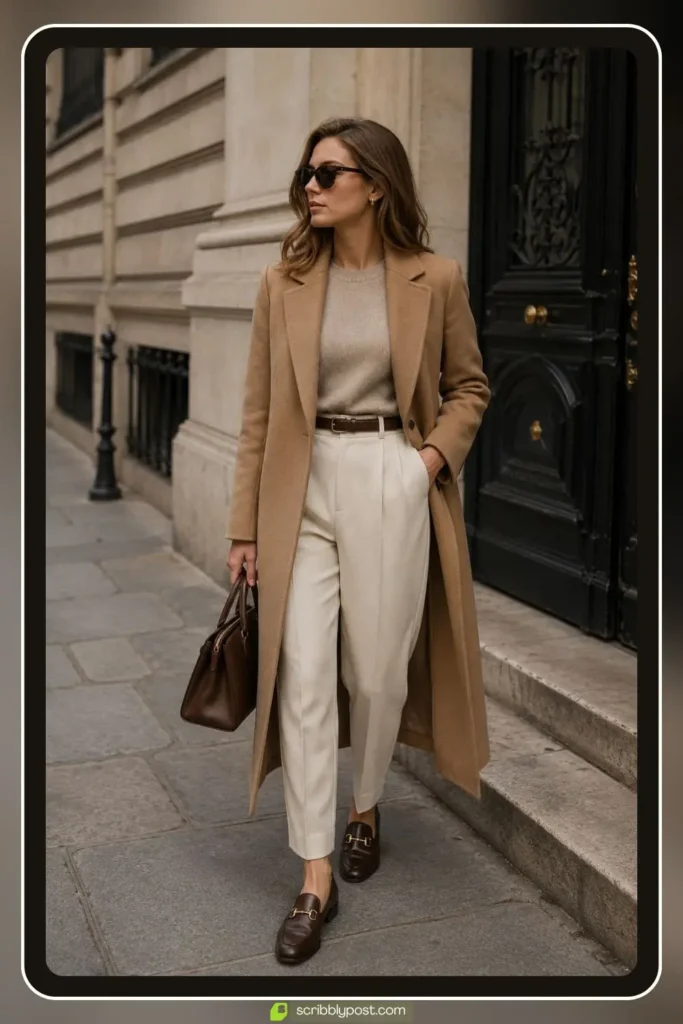
The camel coat. The piece to overspend on, and the only one where the price shows. Fifty percent wool is the floor, knee length or below, single-breasted or wrap. For four months of the year this is what people see instead of your outfit, which means it does more work than anything underneath it. Every set of old money winter outfits on the internet is this coat over something already on this list.
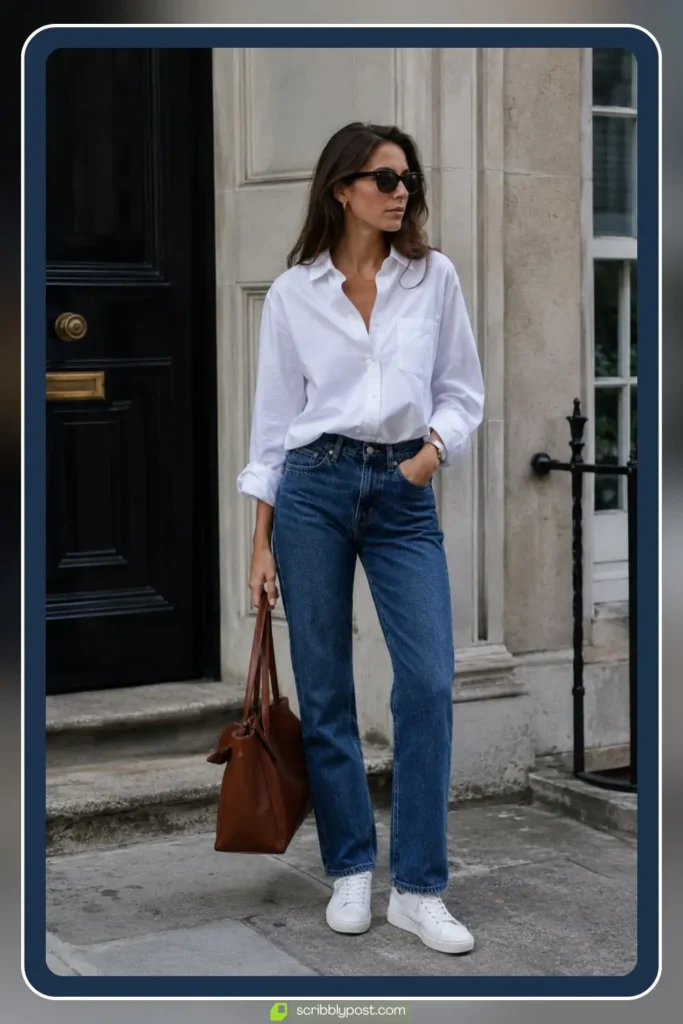
The white shirt and the straight jeans. Two pieces, one job, which is why they are listed together. Cotton poplin rather than stretch, a size up from your usual so it drapes, sleeves rolled twice. The jeans are mid or dark blue, straight leg, mid to high rise, no rips, no whiskering, no contrast stitching. Together they are the base of every casual old money outfits search and most old money weekend outfits, and separately each one goes with three other things on this list.
The loafers. No photograph needed, because the rule is simple: leather, low heel, no visible hardware, in brown or black. Shoes and coat are where people can tell what you spent, so this is the second place to put money. Between loafers, white leather sneakers and knee boots you have covered every outfit on this page, and loafers are the pair that does the most.
Tier 2: The Five That Do The Most Work
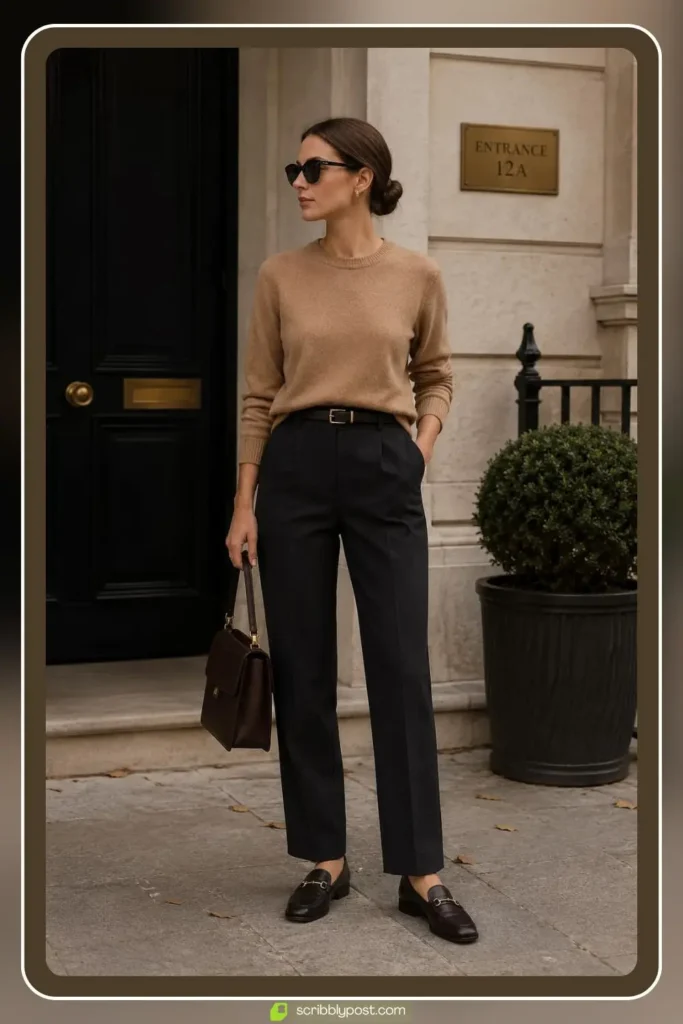
The cashmere crewneck. Navy or camel, fine gauge rather than chunky so it fits under the blazer. Helander’s cable knits and turtlenecks live in this slot too. It is the piece that turns a summer outfit into an autumn one without changing anything else, and knotted over the shoulders it is the one styling move in this entire aesthetic that is allowed to look deliberate.
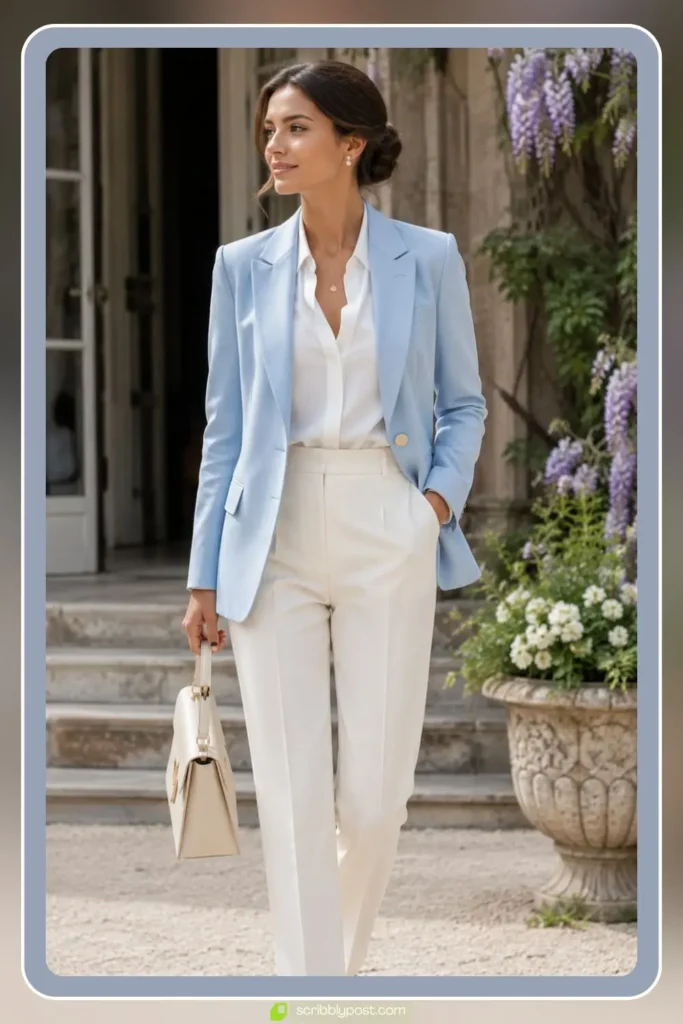
The cream trousers. The most underrated purchase on the list. Cream or stone, straight leg, full length, and they are the reason an outfit looks expensive in a way black trousers never manage. They need pressing and they show everything, which is the point: visibly maintained clothes are the entire idea. This is also the slot where old money outfits spring lives, because cream trousers plus a soft-colored blazer is the only place a pale color belongs.
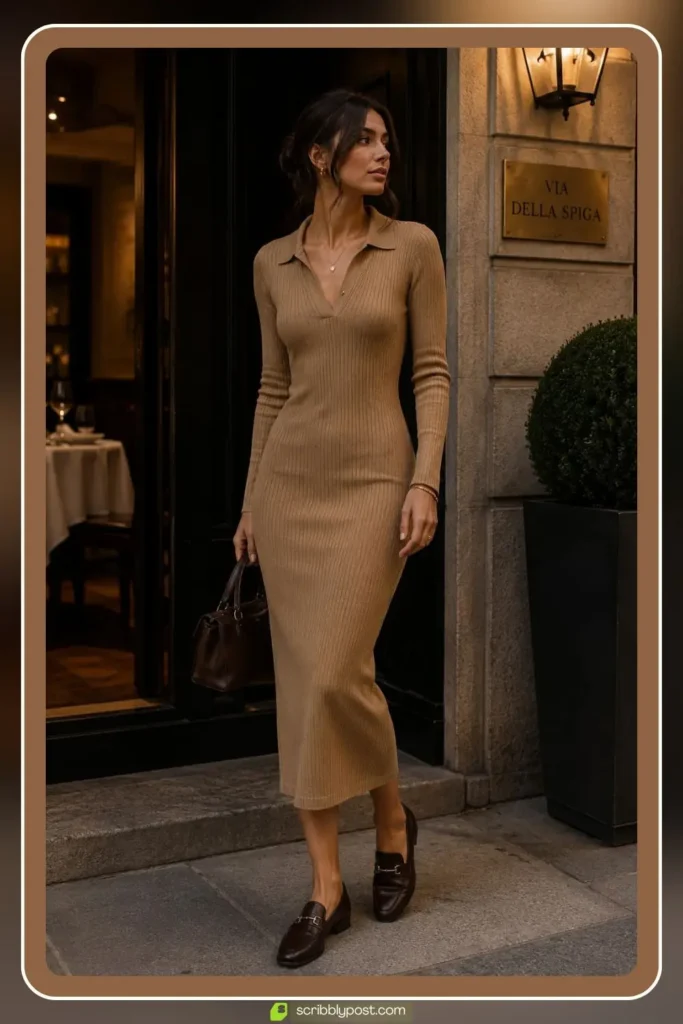
The knit dress. Camel, black or navy, crew or low turtleneck, fitted but not clinging, hem at mid-calf. One piece, no decisions, and it takes a blazer or a coat over it without fighting either. When people search for an old money outfits dress this is what they mean, and it is the answer to old money date outfits for the same reason: nothing to coordinate. A [AMAZON: ribbed knit midi dress] in camel is the version to look for.
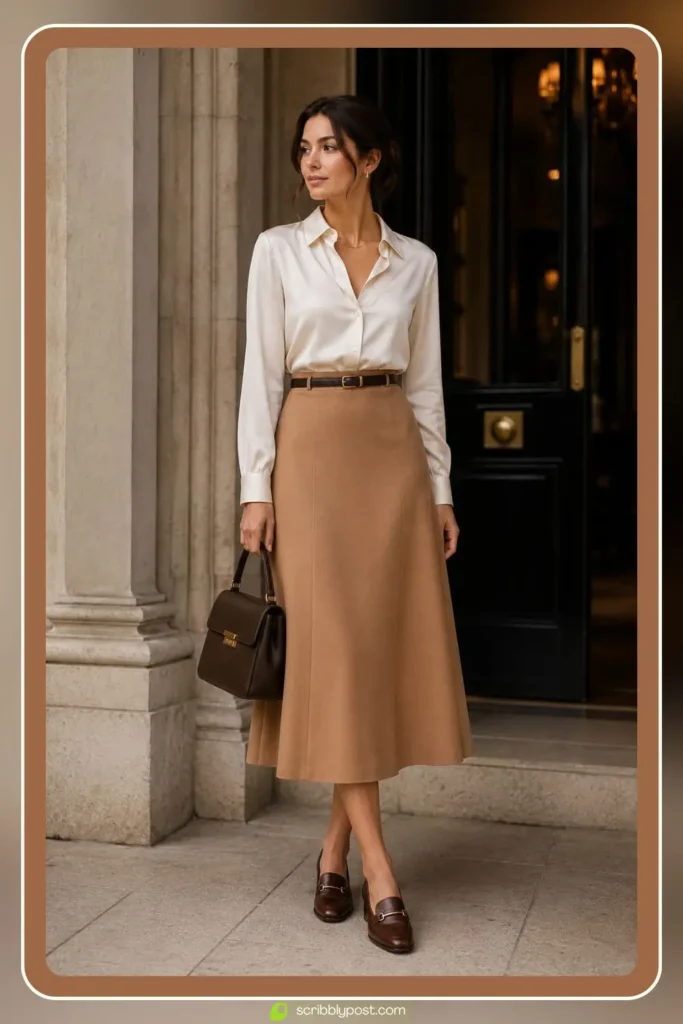
The midi skirt. A-line or straight, wool or heavy crepe, hem at mid-calf rather than at the knee, in camel, navy or charcoal. It takes the white shirt, the cashmere crewneck and the silk blouse, which is three outfits from one purchase. Tuck the top in at the front only. That single detail is most of old money fashion for women.
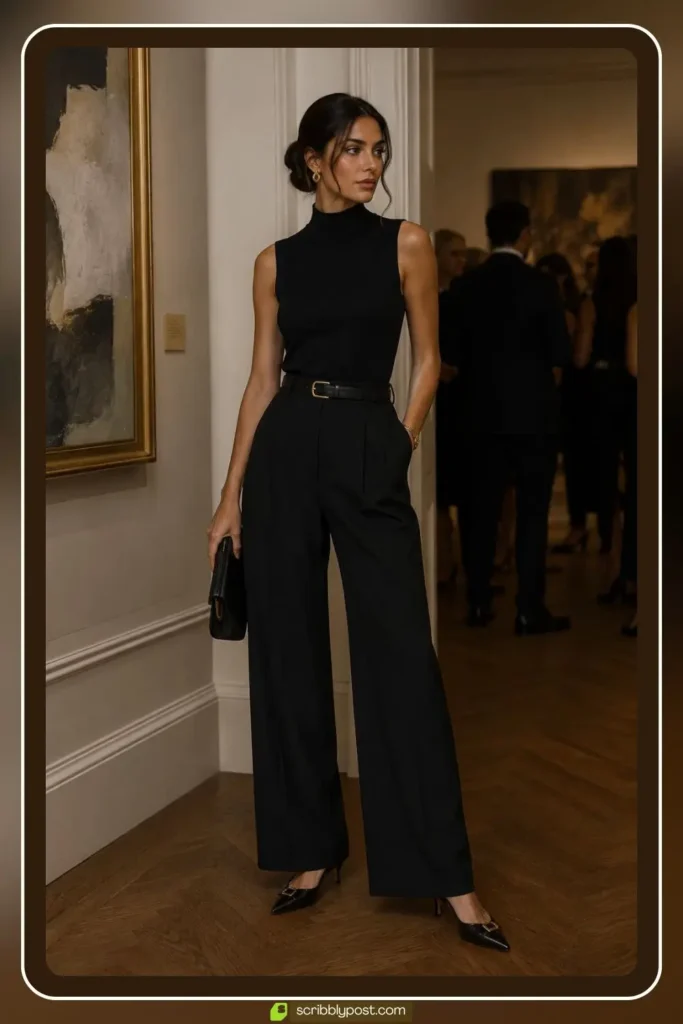
The wide-leg trousers. Cream or black, breaking on the shoe, high waisted. These are what make old money party outfits work without a dress, and they are the most comfortable thing on the list, which matters more than anyone admits. With a structured sleeveless top they are evening, which is where the chic old money outfits people save for parties come from. With the white shirt they are the office.
What I own, What I wear, and The one I got wrong
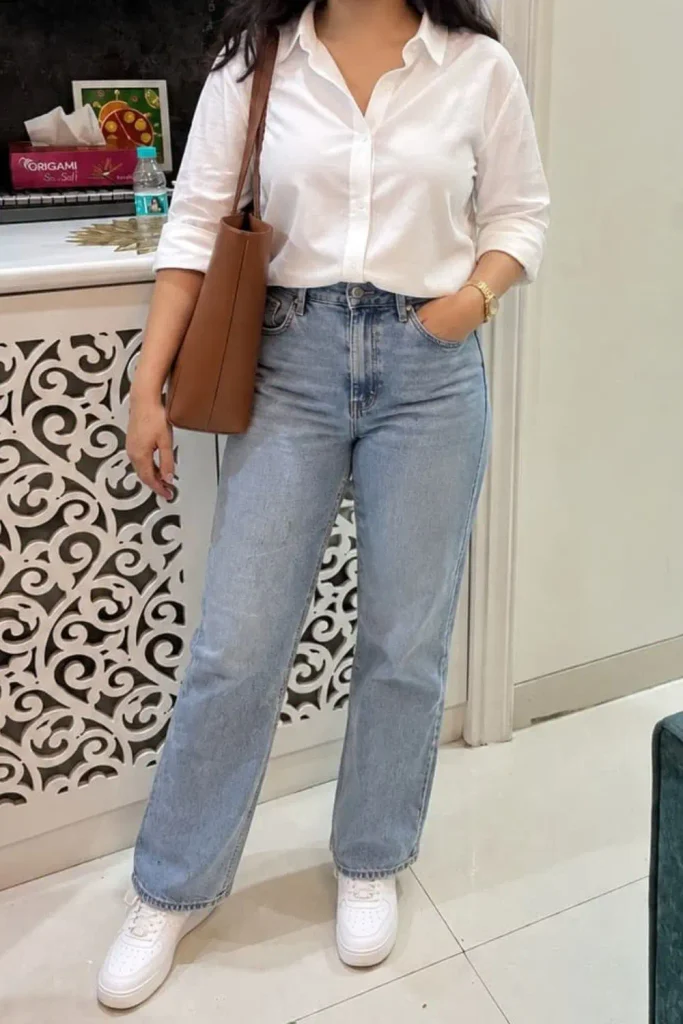
I bought the white button-down and straight-leg jeans because this is the kind of outfit I know I’ll wear on repeat. The shirt keeps the look polished, while the straight-leg jeans make it feel relaxed enough for everyday wear. I’ve worn both pieces several times, together and separately, and they work with almost everything else in my wardrobe. The white sneakers and brown leather tote keep the outfit simple, while the rolled-up sleeves add a slightly relaxed touch. This ended up being one of those combinations I could put on without much thought and still feel put together.
Tier 3: The Five For Occasions
Buy these when something in your diary needs them, not before. Each one covers a situation the first ten cannot.
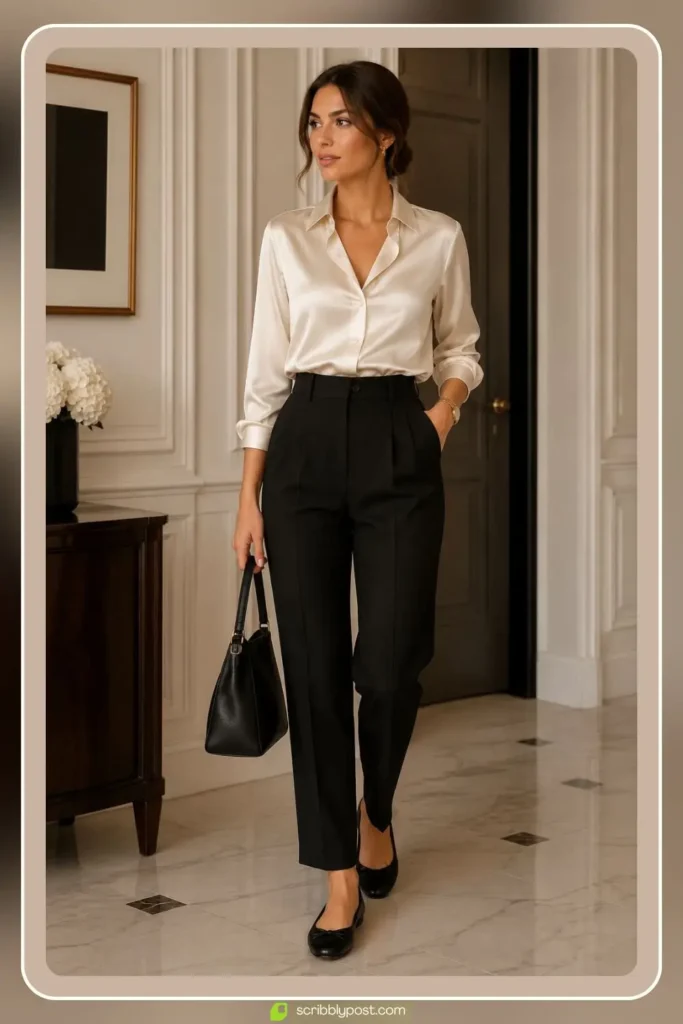
The satin blouse. Ivory or champagne, tucked into the wide-leg or the high-waist trousers. It is the only piece on the list that catches light, which is exactly what old money dinner outfits need, and the rule that comes with it is that nothing else shines. Leather bag, plain gold, no second satin.
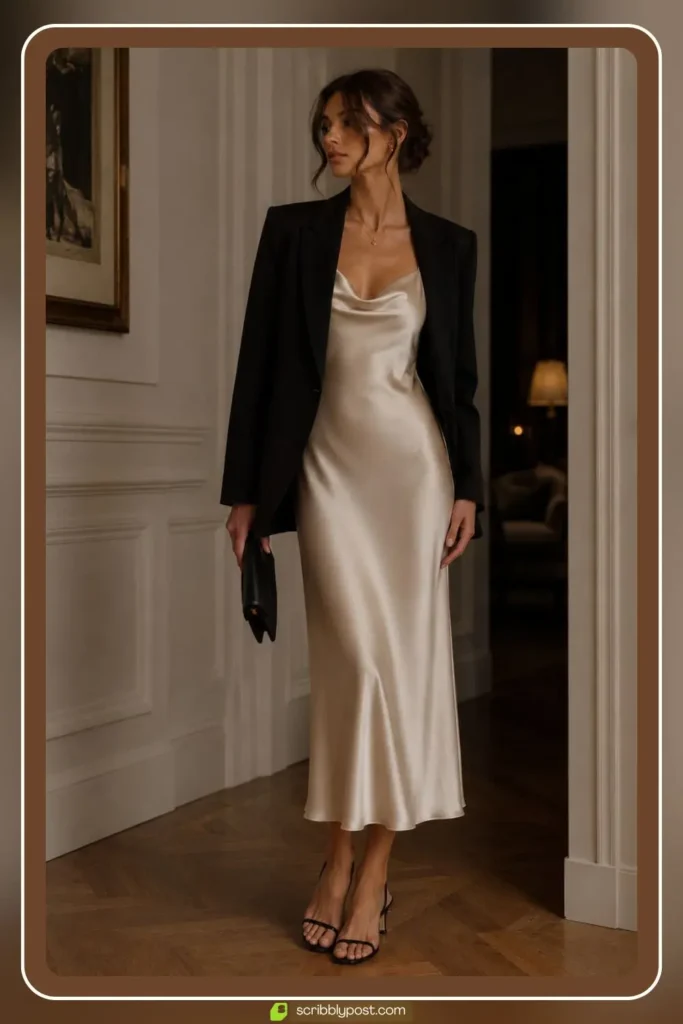
The slip dress. Black or champagne silk, bias cut, worn under the navy blazer from tier 1 rather than on its own. That pairing is what makes it one of the classy old money outfits rather than a going-out dress, and it is a good illustration of how this capsule works: a new piece earns its place by combining with an old one.
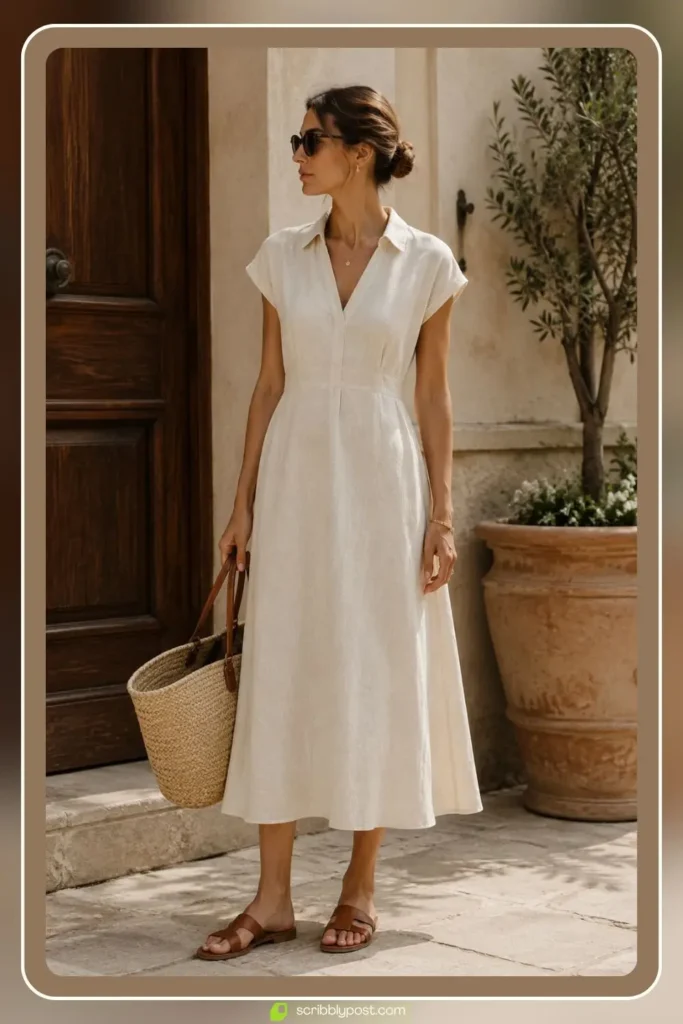
The linen dress. White or sand, straight or A-line, mid-calf. Old money summer outfits and old money vacation outfits are both this dress plus leather sandals, and the whole of old money aesthetic summer outfits comes down to accepting that linen creases. It is supposed to. A [AMAZON: women’s linen midi dress] in white gets more wears per summer than anything else you own.
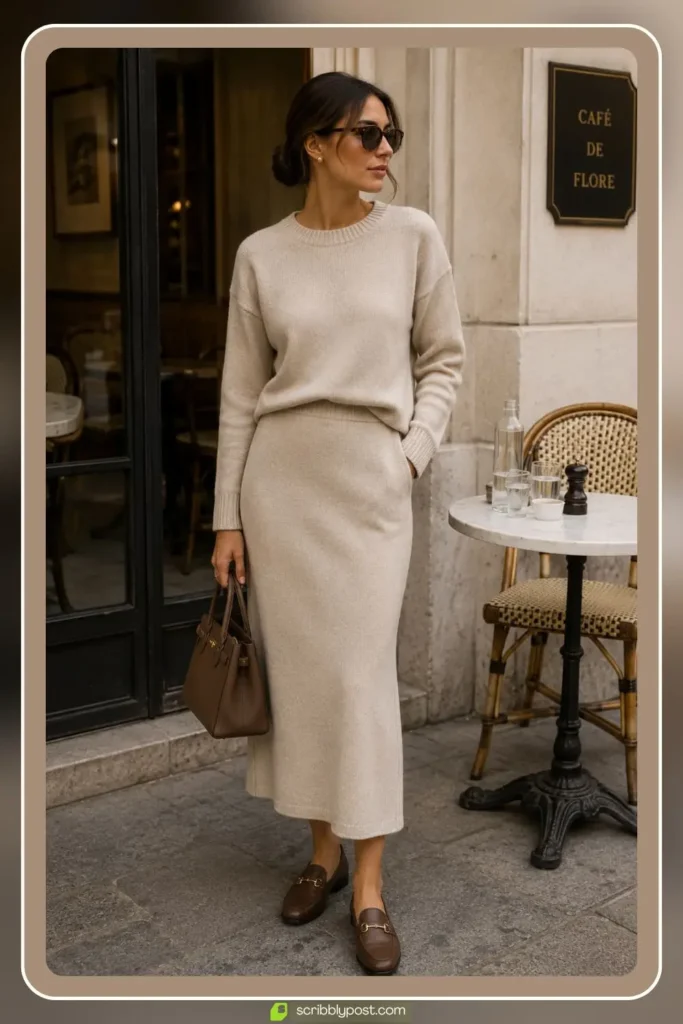
The knit set. Oatmeal, camel or cream, top and bottom in the same yarn. It is the one piece bought purely for comfort and it still looks considered, which is why old money brunch outfits are almost always a knit set. Size up through the hip. A set that clings turns into loungewear, and drape is the only thing separating the two.
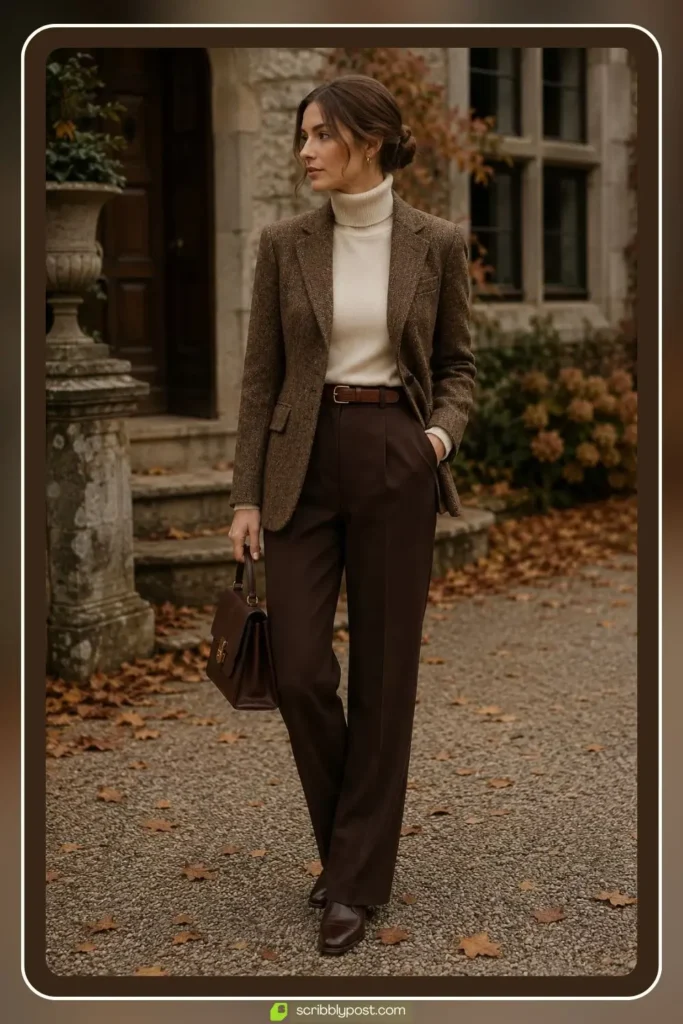
The tweed jacket. Brown or oatmeal, and the only patterned thing on the list. Herringbone counts. It replaces the navy blazer from October to February and it is what makes old money outfits autumn look different from the rest of the year without buying a new wardrobe. Over the cream turtleneck with brown trousers and riding boots.
What Fifteen Pieces Make
This is the argument for building it this way. Because everything is in the same six colours, almost any top goes with almost any bottom, which gives you well over fifty combinations from fifteen garments. Here are the ones worth memorising.
| Occasion | The combination |
|---|---|
| Office, interview | Navy blazer, cream trousers, white shirt, loafers |
| Brunch | Knit set, ballet flats |
| Weekend | White shirt, straight jeans, cashmere knotted over |
| Date | Knit dress, loafers, gold hoops |
| Dinner | Satin blouse, wide-leg trousers |
| Party | Slip dress under the navy blazer |
| Summer, vacation | Linen dress, leather sandals |
| Spring | Cream trousers, soft blazer, loafers |
| Autumn | Tweed jacket, cashmere, midi skirt, boots |
| Winter | Camel coat over any row above |
Read down that column and you will see the same garments recurring, which is the whole point. An old money capsule wardrobe outfits list is not fifty things, it is fifteen things used ten ways. Old money neutral outfits work because the colour discipline does the coordinating for you, and elegant old money outfits come from hems and sleeve lengths rather than from labels.
Where To Spend and Where Not To
Spend on the coat and the shoes, because those are the two things where quality is visible at a distance. Spend on the blazer if you can, or spend on having a cheaper one altered, which costs a fraction and achieves more. Everything else, including the white shirt, the jeans, the knits and every dress on the list, can come from a high street shop and nobody will know, because on those pieces it is the fit and the pressing that people register, not the fabric.
Which is the honest answer to whether you can do this on a budget. You can, and the tailor is the reason. A hem and a sleeve length on a sale blazer will take you further than a full-price one that does not fit. A [AMAZON: garment steamer] does the rest, because half of what makes these clothes look expensive is that they look looked-after.
One note on who this is for. The searches say old money outfits women, old money outfits for women, old money outfits female, and every image here is drawn on a woman, but the list is the list: fit, fabric, colour. There is no body type that this does or does not suit. There is only a hem that lands in the right place. Nails to match are in the old money nails diary, and if you are dressing for the weather rather than the wardrobe, the fall outfit thermometer is the other way to do this.

